High level of innovation

Made in Germany

Healthy Flooring

CLASSEN Logo - Blue Leaf
Dealer Area

Product Visualizer

Product Visualizer

Go to the planner

Product Consultant

For consultation
Discover fresh ideas, the latest DIY trends, and creative interior design concepts—to add more style and personality to your home.
Learn more
Do you have any questions or would you like a personal consultation? Our team is here to help—we’re fast, friendly, and knowledgeable. Send us an email, give us a call, or use our contact form.
Contact Us

Careers

Want to make a difference? At CLASSEN, you’ll find more than just a job: exciting challenges, real opportunities, and a great team.

Sustainable flooring powered by solar energy: Photovoltaic system supplies CLASSEN factory

Published onMay 15, 2023
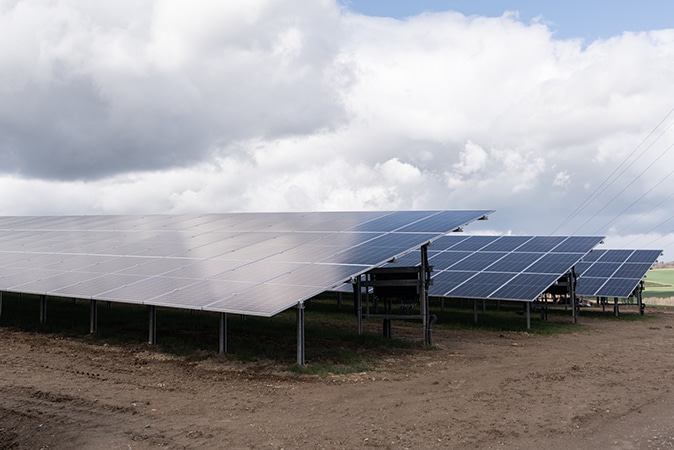
Solar system with modules mounted on a steel frame

On summer days, the Kaisersesch facility operates exclusively on solar power

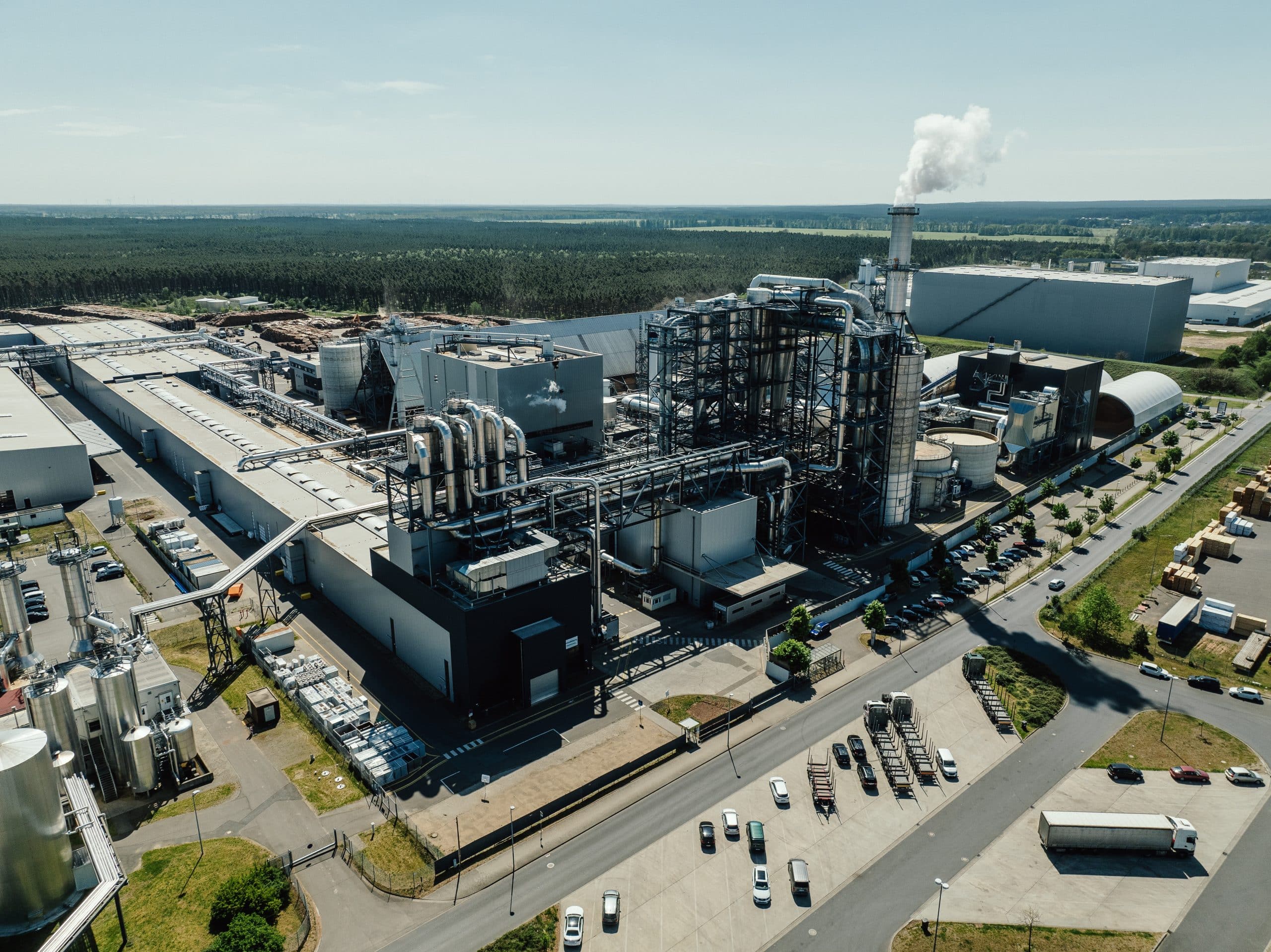
Kaisersesch, April 15, 2023. Covering an area of 35,000 m², the CLASSEN Group’s new photovoltaic system generates green energy for the Kaisersesch production site. The massive solar park generates enough electricity annually to power approximately 1,300 two-person households for an entire year or to supply a soccer stadium with energy for about 200 games. This is made possible by the nearly 7,000 modules, which generate approximately 4,234,000 kWh of electricity within a year. The modern PV system is located in a field in the immediate vicinity of the Kaisersesch plant and is seamlessly integrated into production. It supplies the most energy-intensive areas—the granulate plant and panel production—with green electricity. In this way, CLASSEN takes a major step closer to its ambitious goals in terms of sustainability and the circular economy. The family-owned company is increasingly relying on renewable energy in the production of fully recyclable flooring such as CERAMIN®.

Solar power systems are expected to supply a quarter of the electricity

To date, the solar power system has achieved an energy self-sufficiency rate of 11 percent—not including the company’s own biomass power plant and the additional solar panels currently being planned. This means that more than one-tenth of the facility’s electricity consumption is already covered by its own PV system. Only nighttime production cannot be covered by solar energy, which skews what is otherwise a very good self-sufficiency rate. To use the green electricity as efficiently as possible during the day, the machines operate on a staggered schedule throughout the week. This allows the solar power to be generated and consumed immediately. On summer days, the entire operation in Kaisersesch is even powered solely by the solar system. The investment of approximately three million euros in the plant’s sustainability and self-sufficiency is thus paying off. The flooring manufacturer expects the investment to pay for itself within 4.5 years. CLASSEN has been consistently committed to sustainability for years and is already working on a second solar park at the same location. The company forecasts that the two PV systems combined will be able to cover about a quarter of the electricity demand using solar energy alone.
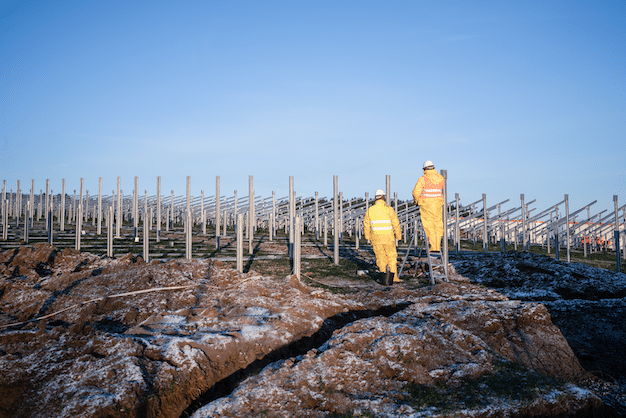
Construction of the solar park, with equipment and two workers in protective suits inspecting the construction site

Accelerating the company's energy transition through a willingness to take risks

The installation of the solar system proved to be a constant challenge. It took nearly two years from planning to commissioning—significantly longer if CLASSEN hadn’t been willing to take risks. The project began in July 2021. The building permit application was submitted in December. It took another six months for approval to be granted. With delivery times of up to two years, the uncertain wait for the permit threatened to further delay the energy transition at the facility. That was not an option for the family-owned business. “If you really want to make a difference, you have to act instead of waiting,” says Stefanie Quervel, CFO of the CLASSEN Group. CLASSEN decided to procure the solar modules and transformer stations at its own risk—before receiving the building permit. The move paid off, and the PV system went into operation in April. The flooring manufacturer is convinced of the project’s success and is already working on a second solar park with roughly twice as many modules (13,824). The additional PV system is expected to produce 5,684,000 kWh of electricity and increase the self-sufficiency rate of solar energy to around 25 percent.

A strong signal to the industry

With its Cradle to Cradle Material Health certification, the CLASSEN Group is sending a strong signal about sustainable innovation in the flooring industry. “This certification is another milestone for our company and demonstrates that sustainable business practices and high-quality product solutions can go hand in hand,” explains Sebastian Wendel, who is responsible for strategic business development at the CLASSEN.

You candownload images here.

Press Contact
classen

Share this post

Press Release


Press Release

Contact person

Contact
partner

Marketing Team
CLASSEN Group

Email
presse@classen.de

About the CLASSEN Group

As a leading German manufacturer of wall and floor coverings, CLASSEN is CLASSEN technological leadership and durable product solutions. Around 2,000 employees worldwide are committed to efficient processes, responsible use of materials, and continuous improvement throughout the entire value chain. With professional expertise and dedication, they promote resource-efficient processes, durable product concepts, and the return of suitable materials to the recycling loop. CLASSEN deliberately CLASSEN the use of chlorine, PVC, and plasticizers in its wall and floor coverings.


With numerous patents available to the entire industry, the company underscores not only its own independence but also its commitment to continuous innovation. With CERAMIN®, CLASSEN has developed CLASSEN material that consists largely of recycled plastic and is highly recyclable. In doing so, CLASSEN is making CLASSEN exemplary contribution to the circular economy. Founded in 1962 by Dr. Hans-Jürgen Hannig, the family-owned company is currently managed by three generations, including the founder himself, in its operational management.
magnifiercrossmenucheckmark-circle