High Level of Innovation

Made in Germany

For modern living spaces
CLASSEN Logo - Blue Leaf
Dealer Area

Product Visualizer

Product
Visualizer

Go to the Planner

Product Consultant

About the Consultation
Discover fresh ideas, the latest DIY trends, and creative room designs—to add more style and personality to your home.
Learn More
Do you have questions or would you like a personalized consultation? Our team is here for you—prompt, friendly, and knowledgeable. Write to us, give us a call, or use our contact form.
Contact Request

Careers

Want to make a difference? At CLASSEN, you'll find more than just a job: exciting challenges, real opportunities, and a great team.

MDF-Turpentine Process

Admitted to the EU Innovation Center INCITE

Published onSeptember 26, 2026
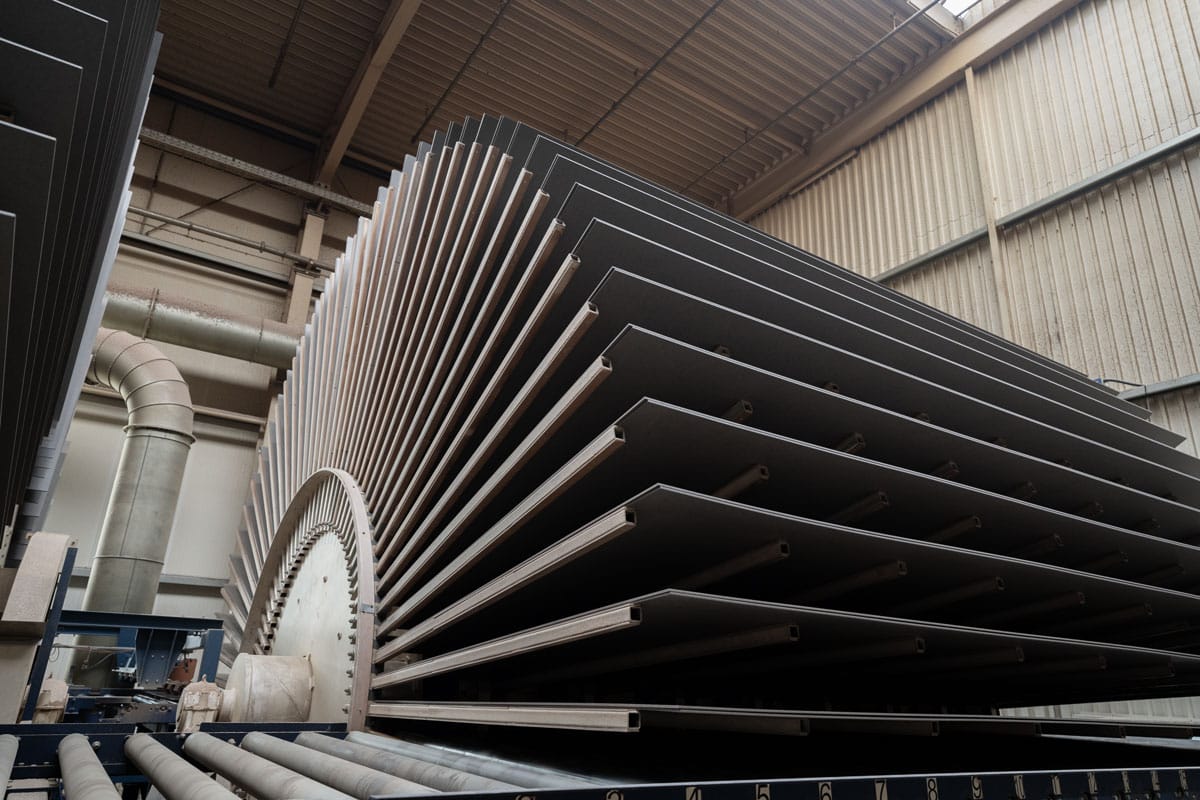
Panel Production. Removal and distribution of the manufactured panels
In the future, technology could be taken into account when determining the best available techniques for the European wood-based materials industry
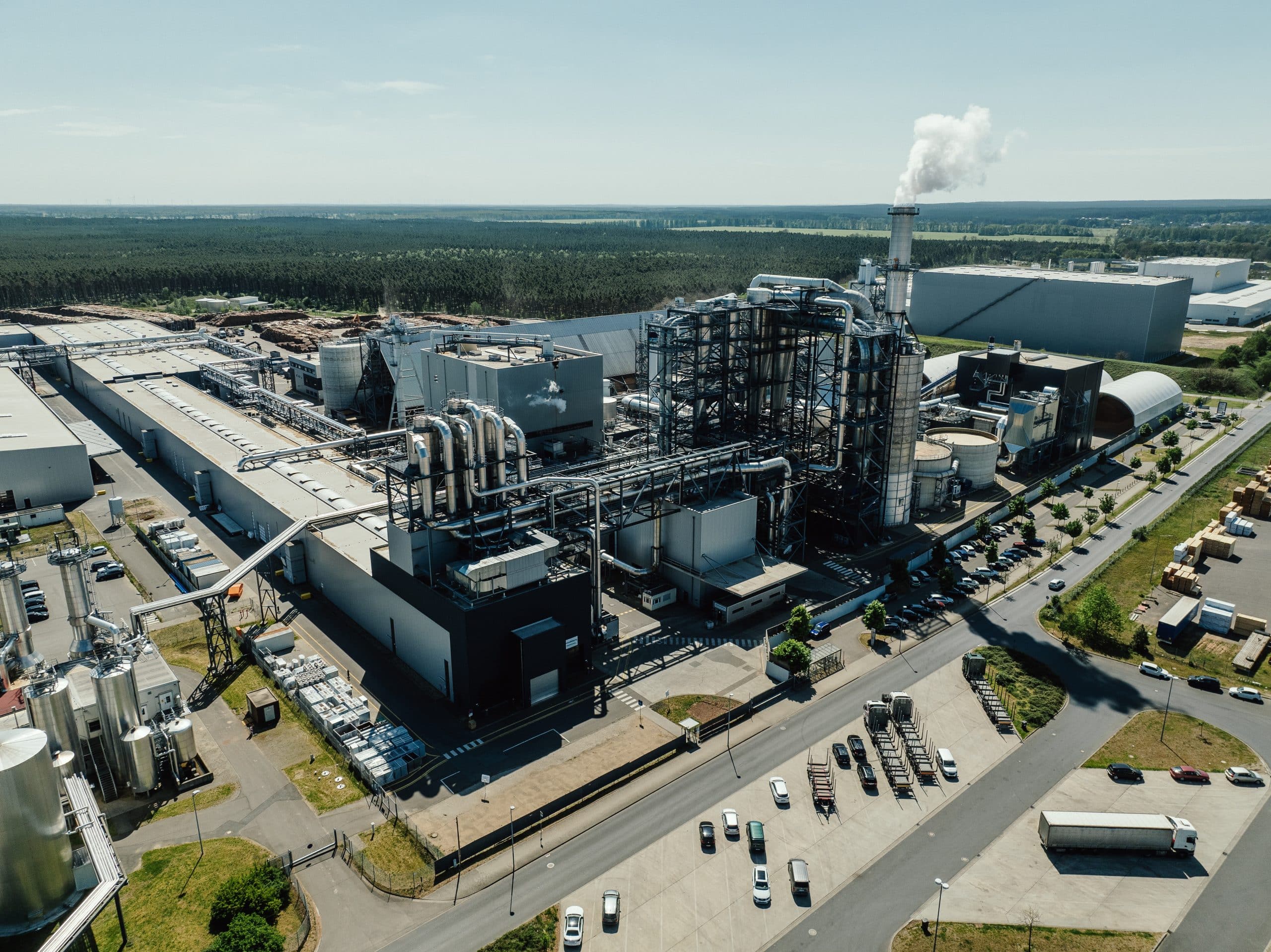
Baruth/Mark, September 21, 2026. The MDF-turpentine process developed by the CLASSEN Group has reached an important milestone at the European level: INCITE, the European Commission’s Innovation Center for Industrial Transformation and Emissions, has reviewed the technology and included it in its database of innovative industrial technologies. As a result, the process developed in Baruth/Mark is now also taking center stage in the further development of European standards for the wood-based materials industry.
INCITE identifies and evaluates innovative technologies that can contribute to the objectives of the European Industrial Emissions Directive (IED). Key areas of focus include the reduction of pollutant emissions, more efficient use of resources, decarbonization, and circularity.


As part of the assessment, CLASSEN’s MDF turpentine process was also evaluated against these criteria. The result is particularly relevant for the further development of European standards for the wood-based materials industry: INCITE considers the process a candidate that could be taken into account in a future revision of the European reference document on best available techniques for the wood-based materials industry.

FROM INNOVATION TO A POTENTIAL INDUSTRY STANDARD

The so-called BAT reference documents—known as BREFs in English—describe which techniques are considered particularly suitable in a given industry for preventing or reducing emissions. They thus form an important basis for establishing emission requirements for industrial facilities in Europe.

As part of a future revision, the MDF turpentine process could initially be considered as “Best Available Technique” (BAT) or as an “Emerging Technique” (ET). Such a classification has not yet been made but would be part of a multi-stage European review process.

Should the process ultimately be included in the European BAT conclusions, the technology developed in Baruth could play a role in the future development of technical standards for MDF production in Europe.

TECHNOLOGY FROM BARUTH ADDRESSES
CHALLENGES FACING THE MDF INDUSTRY

The process developed by CLASSEN addresses a particular challenge in MDF production using pine wood. The terpenes contained in the wood are released during the manufacturing process and contribute to emissions of volatile organic compounds (VOCs). Conventional exhaust air purification methods can only remove these substances to a limited extent due to their low water solubility.

MDF turpentine technology therefore intervenes directly in the production process. Terpenes are separated from the process steam before they enter the dryer exhaust air. According to CLASSEN, this allows VOC emissions at the Fiberboard GmbH site in Baruth to be reduced to less than 60 milligrams per cubic meter of exhaust air. This is less than half of the currently applicable BAT-AEL limit of 120 milligrams per cubic meter.

In a further step, the separated turpentine is to be used in the future as a raw material for industrial applications. A corresponding plant is currently under construction in Baruth and is scheduled to go into operation at the end of 2026.

CLASSEN has already published detailed information on how the MDF turpentine process works and on the new plant in Baruth in the press release “CLASSEN Turns Emissions into a Raw Material: New Technology Extracts Turpentine from MDF Production” dated September 7, 2026.

OUTLOOK FOR INTERNATIONAL MDF PRODUCTION

For CLASSEN, INCITE’s adoption of the process is therefore an important step toward making it available beyond its own production site. The technology can offer technical and economic benefits, particularly for MDF plants that use pine wood and face similar challenges in reducing VOC emissions.

CLASSEN is currently working on the global commercialization of the process. The technology is also intended to be made available to other MDF manufacturers through licensing models; initial discussions on this are already underway.
Contact:
Sebastian Wendel
CLASSEN Group
Wendel@classen.de
Additional technical information about the process:
Learn More

Share this post

Press Release

Press
information

Contact Person

Contact
partner

Marketing Team
CLASSEN Group

Email
presse@classen.com

About the CLASSEN Group

As a leading German manufacturer of wall and floor coverings, CLASSEN stands for technological leadership and durable product solutions. Approximately 2,000 employees worldwide are committed to efficient processes, responsible use of materials, and continuous improvement throughout the entire value chain. With professional expertise and dedication, they promote resource-efficient processes, durable product concepts, and the return of suitable materials to the recycling loop. CLASSEN deliberately avoids the use of chlorine, PVC, and plasticizers in its wall and floor coverings.


With numerous patents available to the entire industry, the company underscores not only its own independence but also its commitment to continuous innovation. With CERAMIN®, CLASSEN has developed a material that consists largely of recycled plastic and is highly recyclable. In doing so, CLASSEN is making an exemplary contribution to the circular economy. Founded in 1962 by Dr. Hans-Jürgen Hannig, the family-owned company is currently managed by three generations, including the founder himself, who are involved in day-to-day operations.
magnifiercrossmenucheckmark-circle