High level of innovation

Made in Germany

Healthy Flooring
CLASSEN - Blue Leaf
Dealer Area

Product Visualizer

Product Visualizer

Go to the planner

Product Consultant

For consultation
Discover fresh ideas, the latest DIY trends, and creative interior design concepts—to add more style and personality to your home.
Learn more
Do you have any questions or would you like a personal consultation? Our team is here to help—we’re fast, friendly, and knowledgeable. Send us an email, give us a call, or use our contact form.
Contact Us

Careers

Want to make a difference? At CLASSEN more than just a job: exciting challenges, real opportunities, and a great team.
Accessories

Broad Alliance for PVC Alternatives Launched

Published onAugust 9, 2023
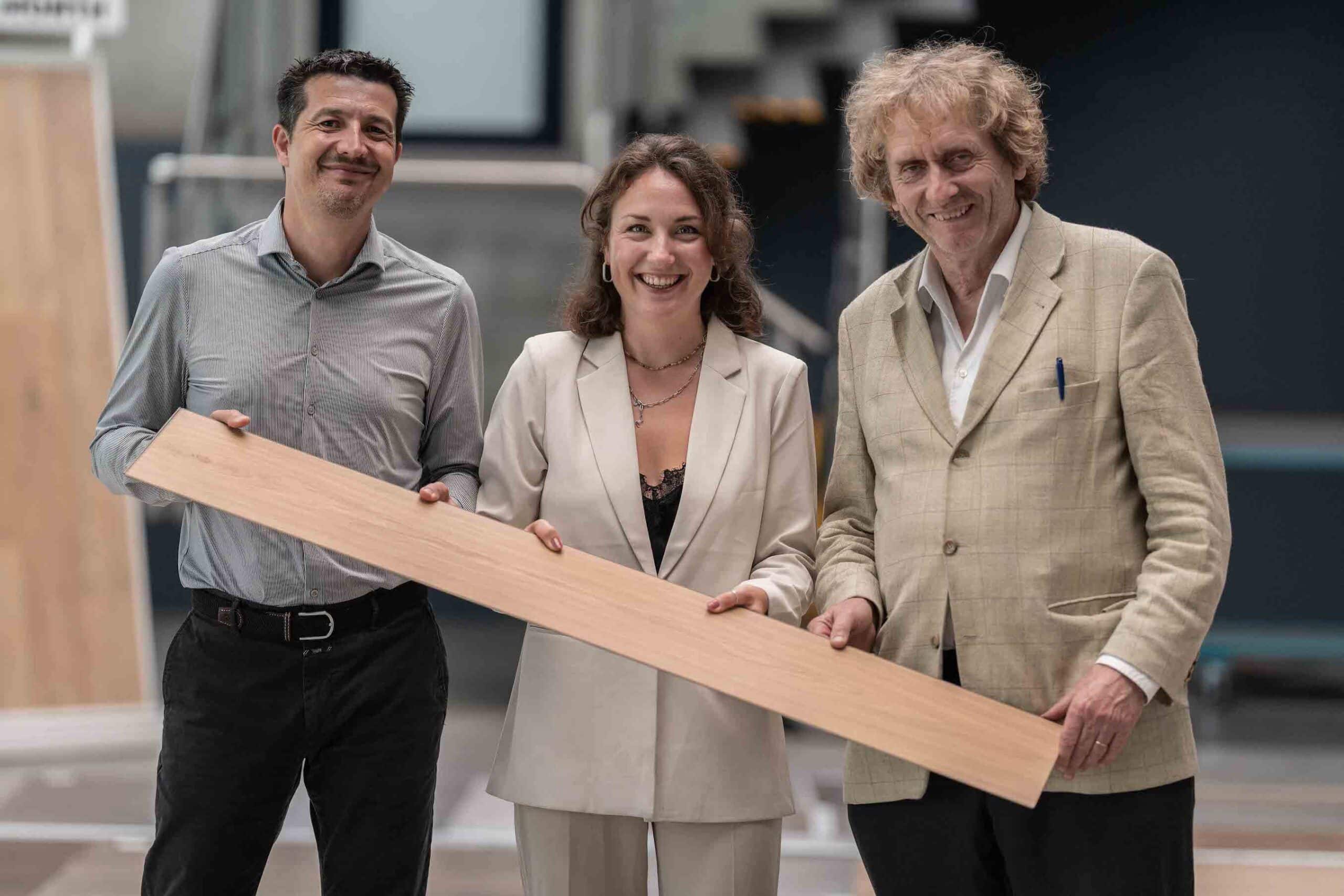
Three people are holding a long floor panel together and smiling at the camera—a symbol of teamwork, innovation, and the sustainable development of flooring at CLASSEN.

BRAUNGART EPEA and CLASSEN aim to further establish CERAMIN® and other healthy building materials

Kaisersesch/Hamburg, August 9, 2023. “PVC is not a material of the future, and PVC production and use should be phased out sooner rather than later.” With this clear statement, Cradle-to-Cradle pioneer Prof. Dr. Michael Braungart introduces his interim report on the collaboration between BRAUNGART EPEA – Internationale Umweltforschung GmbH and the CLASSEN . Against the backdrop of the impending PVC ban under the Green Deal and the European Union’s REACH Regulation, the focus is shifting to materials, products, and processes that are suitable for the circular economy and pose no harm to either people or the environment. According to Braungart, the PVC-free material CERAMIN®, developed by the CLASSEN , is of outstanding interest to the entire flooring industry due to its recyclability and health benefits—an industry that, to date, still supplies the construction sector and the market at large with PVC in design and vinyl flooring on a massive scale. As part of a broad alliance—which will in the future include additional companies that also refrain from using PVC—the goal is to further establish polypropylene (PP) as an equivalent, but above all, healthier alternative to PVC. The Cradle-to-Cradle certification of CERAMIN®, which has already been initiated, is a first step in this direction.
Prof. Dr. Michael Braungart was awarded the Honorary Prize of the German Sustainability Award just last fall and has long been regarded as a pioneer in the fields of eco-design, waste prevention, and the circular economy. Through the Environmental Protection Encouragement Agency (EPEA), which he founded more than 30 years ago, he and William McDonough established the Cradle to Cradle concept. The concept involves a continuous and consistent cycle of materials. It describes the safe and, in principle, infinite circulation of materials and nutrients within cycles. What the biological decomposition of individual product components returned to nature—such as through complete composting—means for the biosphere, complete recycling into new products means for industry and the technosphere. As a result, products and production processes should not only be less harmful to people and nature but also have a positive impact.

The impending ban on PVC is fueling the search for alternatives

Braungart has long been concerned about the harmful effects of PVC. In a preliminary interim assessment of the collaboration with the CLASSEN , he highlights all the well-established facts regarding the toxicity to humans and the environment during the production, use, and disposal of PVC, as well as its enormous energy and resource consumption and the near-impossibility of recycling it. At the EU level, a ban on PVC in indoor spaces has been under discussion since at least the publication of the Ramboll study in 2022. This is not the only reason why the search for alternatives that are not only free of harmful substances but also fully recyclable is in full swing. The flooring industry is particularly affected by this. In Europe alone, approximately 190 million square meters of PVC-containing vinyl flooring were produced in 2022. That is equivalent to about 32,000 soccer fields—year after year. About half of the roughly 1.2 million tons of material comes from China. Material whose subsequent disposal poses a multitude of risks to the environment and human health. This underscores the urgency of establishing alternative materials.

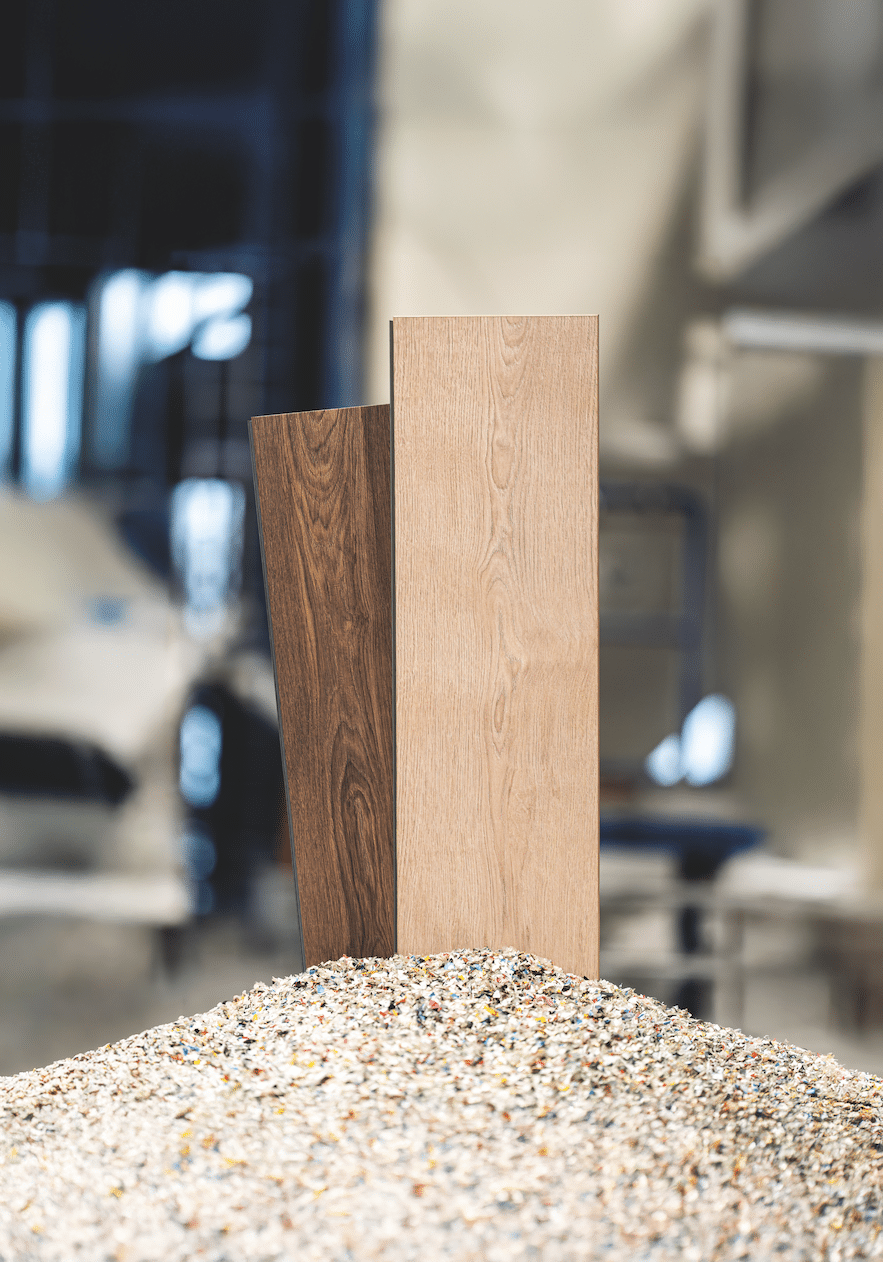
For this reason, Braungart is pushing for collaboration with the CLASSEN , which, with its polypropylene-based material CERAMIN®, meets all the requirements to establish a suitable alternative to harmful PVC floor and wall coverings. Not only are products made from CERAMIN® at least equivalent in terms of material properties such as durability, moisture resistance, design versatility, and ease of processing, but unlike PVC, they are completely safe for health and the environment, fully recyclable, and consist to a high degree of PP recyclates even during production. For this reason, the products also have a significantly smaller carbon footprint and reduce energy consumption by a factor of many through the use of recycled materials in production.

Broad alliance aims to phase out PVC use and open up new markets

However, from the perspective of those involved, the goal of this strategic collaboration is not merely to establish health-conscious CERAMIN® flooring in the construction and flooring industry. To this end, the CLASSEN will work to expand its network with additional market partners, with the support of Braungart EPEA. Furthermore, a broad alliance is to be forged, which other companies that have consciously decided against or are deciding against the use of PVC applications are encouraged to join. Braungart asserts, “A shift in thinking regarding the use of PVC is necessary. The issues must be communicated, and insights must be shared widely. Innovative solutions and alternatives, such as CLASSEN products, CLASSEN an important benchmark in this regard.” In his view, this requires “a coalition of stakeholders willing to eliminate PVC from their products, services, and processes.” The focus is primarily on companies in the construction, electronics, and packaging sectors. “Since supply chains and the distribution of PVC are global in scope, it seems beneficial to also incorporate global perspectives. With CLASSEN the initiator of such a network, opportunities for new markets will open up,” concludes Braungart.

“With the development of CERAMIN® flooring, we have not only created a sustainable future for our family business, but also, thanks to our licensing business, an alternative and entirely new perspective for the entire flooring industry,” says Céline Quervel, Head of Marketing at the CLASSEN , outlining the future possibilities. “Collaboration with Braungart EPEA, other market partners, and environmental and consumer protection organizations is therefore a very high priority for us.”
You can download images here:
Download images

About BRAUNGART EPEA – International Environmental Research GmbH

Since its founding in Hamburg in 1987 by Prof. Dr. Michael Braungart, EPEA GmbH has evolved into an international innovation partner for environmentally sustainable products, processes, buildings, and urban neighborhoods. Our goal is to establish the Cradle to Cradle® design principle for the circular economy across all industrial sectors. This enables us to support companies in getting on the right track and becoming part of the transformation: from the molecular to the modular level, from chemicals to the city.

A strong signal to the industry

With the Cradle to Cradle Material Health certification, the CLASSEN is sending a strong signal in support of sustainable innovation in the flooring industry. “This certification is another milestone for our company and demonstrates that sustainable business practices and high-quality product solutions can go hand in hand,” explains Sebastian Wendel, who is responsible for strategic business development at the CLASSEN.

You candownload images here.

Press Contact
classen

BRAUNGART EPEA and CLASSEN aim to further establishCERAMIN® and other healthy building materials

Kaisersesch/Hamburg, August 9, 2023. “PVC is not a material of the future, and PVC production and use should be phased out sooner rather than later.” With this clear statement, Cradle-to-Cradle pioneer Prof. Dr. Michael Braungart introduces his interim report on the collaboration between BRAUNGART EPEA – Internationale Umweltforschung GmbH and the CLASSEN . Against the backdrop of the impending PVC ban under the Green Deal and the European Union’s REACH Regulation, the focus is shifting to materials, products, and processes that are suitable for the circular economy and pose no harm to either people or the environment. According to Braungart, the PVC-free materialCERAMIN®, developed by the CLASSEN , is of outstanding interest to the entire flooring industry due to its recyclability and health benefits—an industry that, to date, still supplies the construction sector and the market at large with PVC in design and vinyl flooring on a massive scale. As part of a broad alliance—which will in the future include additional companies that also refrain from using PVC—the goal is to further establish polypropylene (PP) as an equivalent, but above all, healthier alternative to PVC. The Cradle-to-Cradle certification ofCERAMIN®, which has already been initiated, is a first step in this direction.

Photo: Sebastian Wendel, Céline Quervel, Prof. Braungart (from left to right)

Prof. Dr. Michael Braungart was awarded the Honorary Prize of the German Sustainability Award just last fall and has long been regarded as a pioneer in the fields of eco-design, waste prevention, and the circular economy. Through the Environmental Protection Encouragement Agency (EPEA), which he founded more than 30 years ago, he and William McDonough established the Cradle to Cradle concept. The concept involves a continuous and consistent cycle of materials. It describes the safe and, in principle, infinite circulation of materials and nutrients within cycles. What the biological decomposition of individual product components returned to nature—such as through complete composting—means for the biosphere, complete recycling into new products means for industry and the technosphere. As a result, products and production processes should not only be less harmful to people and nature but also have a positive impact.

The impending ban on PVC is fueling the search for alternatives

Braungart has long been concerned about the harmful effects of PVC. In a preliminary interim assessment of the collaboration with the CLASSEN , he highlights all the well-known facts regarding the toxicity to humans and the environment during the production, use, and disposal of PVC, as well as its enormous energy and resource consumption and the near-impossibility of recycling it. At the EU level, a ban on PVC in indoor spaces has been under discussion since at least the publication of the Ramboll study in 2022. This is not the only reason why the search for alternatives that are not only free of harmful substances but also fully recyclable is in full swing. The flooring industry is particularly affected by this. In Europe alone, approximately 190 million square meters of PVC-containing vinyl flooring were produced in 2022. That is equivalent to about 32,000 soccer fields—year after year. About half of the roughly 1.2 million tons of material comes from China. Material whose eventual disposal poses a multitude of risks to the environment and human health. This underscores the urgency of establishing alternative materials.

For this reason, Braungart is promoting collaboration with the CLASSEN , whose polypropylene-basedCERAMIN® material meets all the requirements for establishing a suitable alternative to harmful PVC floor and wall coverings. Not only are products made fromCERAMIN® at least equivalent in terms of material properties such as durability, moisture resistance, design versatility, and ease of processing, but unlike PVC, they are completely safe for health and the environment, fully recyclable, and consist to a high degree of PP recyclates even during production. For this reason, the products also have a significantly smaller carbon footprint and reduce energy consumption by a factor of many through the use of recycled materials in production.

Broad alliance aims to phase out PVC use and open up new markets

However, from the perspective of those involved, the goal of this strategic collaboration is not merely to establish health-consciousCERAMIN® flooring in the construction and flooring industry. To this end, the CLASSEN will work to expand its network with additional market partners, with the support of Braungart EPEA. Furthermore, a broad alliance is to be forged, which other companies that have consciously decided against or are deciding against the use of PVC applications are encouraged to join. Braungart asserts, “A shift in thinking regarding the use of PVC is necessary. The issues must be communicated, and insights must be shared widely. Innovative solutions and alternatives, such as CLASSEN products, CLASSEN an important benchmark in this regard.” In his view, this requires “a coalition of stakeholders willing to eliminate PVC from their products, services, and processes.” The focus is primarily on companies in the construction, electronics, and packaging sectors. “Since supply chains and the use of PVC are global in scope, it seems beneficial to incorporate global perspectives as well. With CLASSEN the initiator of such a network, opportunities for new markets will open up,” concludes Braungart.

“By developingCERAMIN® flooring, we have not only created a sustainable future for our family business, but—thanks to our licensing business—we have also opened up an alternative and entirely new perspective for the entire flooring industry,” says Céline Quervel, Head of Marketing at the CLASSEN , outlining the future possibilities. “Collaboration with Braungart EPEA, other market partners, and environmental and consumer protection organizations is therefore a very high priority for us.”

You can download images here: https://cloud.classen.com/main.html?download&weblink=8f7d85f3354f6f05bc12e7dc8924e0d0&realfilename=Pressemitteilung$20-$20Alliance$20against$20PVC$20-$20Image.zip

About BRAUNGART EPEA – International Environmental Research GmbH:

Since its founding in Hamburg in 1987 by Prof. Dr. Michael Braungart, EPEA GmbH has evolved into an international innovation partner for environmentally sustainable products, processes, buildings, and urban neighborhoods. Our goal is to establish the Cradle to Cradle® design principle for the circular economy across all industrial sectors. This enables us to support companies in getting on the right track and becoming part of the transformation: from the molecular to the modular level, from chemicals to the city.

About the CLASSEN Group

As a leading German manufacturer of wall and floor coverings, this family-owned company is synonymous with technological leadership and sustainability. Under the motto “Floors For A Better Tomorrow,” the approximately 2,000 employees of the CLASSEN are committed to a sustainable future across all areas of the value chain. With great passion and expertise, they achieve outstanding results—from resource conservation and a long product lifecycle to the complete recycling of healthy wall and floor coverings.

For its healthy wall and floor coverings, CLASSEN avoids the use of chlorine, PVC, and plasticizers. With numerous patents available to the entire industry, the company underscores not only its own independence but also its ongoing commitment to our natural resources. With CERAMIN®, CLASSEN has developed CLASSEN material consisting largely of recycled plastics and is 100 percent recyclable. In this way, CLASSEN makes CLASSEN exemplary contribution to the circular economy.

Founded in 1962 by Dr. Hans-Jürgen Hannig, the family-owned company is currently led by three generations, including the founder himself, in its operational management.

Share this post

Press Release


Press Release

Contact person

Contact
partner

Marketing Team
CLASSEN Group

Email
classen

About the CLASSEN Group

As a leading German manufacturer of wall and floor coverings, CLASSEN stands CLASSEN technological leadership and durable product solutions. Around 2,000 employees worldwide are committed to efficient processes, responsible use of materials, and continuous improvement throughout the entire value chain. With professional expertise and dedication, they promote resource-efficient processes, durable product concepts, and the return of suitable materials to the recycling loop. CLASSEN deliberately CLASSEN the use of chlorine, PVC, and plasticizers in its wall and floor coverings.


With numerous patents available to the entire industry, the company underscores not only its own independence but also its commitment to continuous innovation. With CERAMIN®, CLASSEN has developed CLASSEN material that consists largely of recycled plastic and is highly recyclable. In doing so, CLASSEN is making CLASSEN exemplary contribution to the circular economy. Founded in 1962 by Dr. Hans-Jürgen Hannig, the family-owned company is currently managed by three generations, including the founder himself, in its operational management.
magnifiercrossmenucheckmark-circle