High level of innovation

Made in Germany

Healthy Flooring
CLASSEN - Blue Leaf
Dealer Area

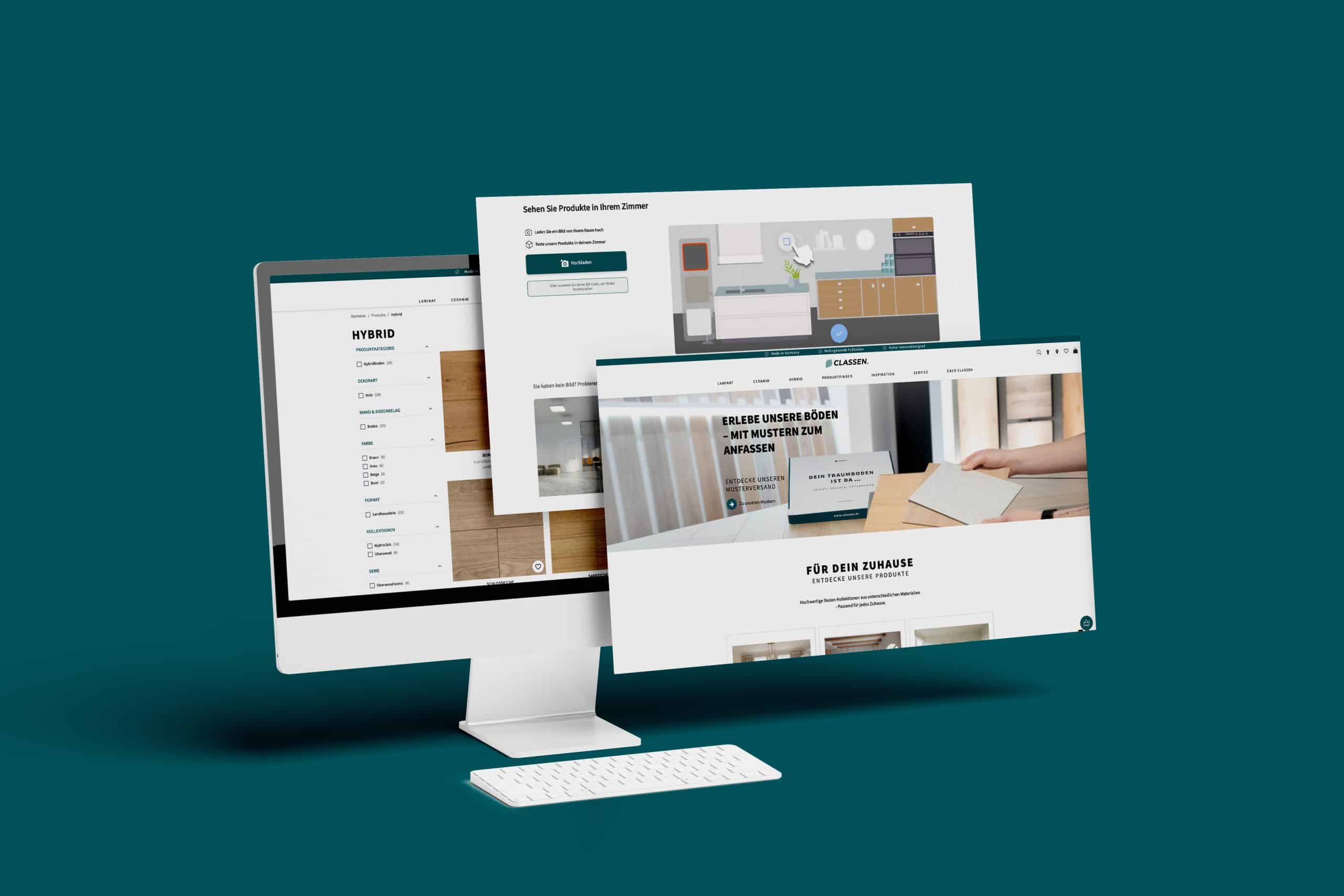
Product Visualizer

Product Visualizer

Go to the planner

Product Consultant

For consultation
Discover fresh ideas, the latest DIY trends, and creative interior design concepts—to add more style and personality to your home.
Learn more
Do you have any questions or would you like a personal consultation? Our team is here to help—we’re fast, friendly, and knowledgeable. Send us an email, give us a call, or use our contact form.
Contact Us

Careers

Want to make a difference? At CLASSEN more than just a job: exciting challenges, real opportunities, and a great team.
Accessories

Brandenburg's Minister of Economic Affairs visits Baruth/Mark to learn about a planned energy project 

Published onAugust 20, 2024
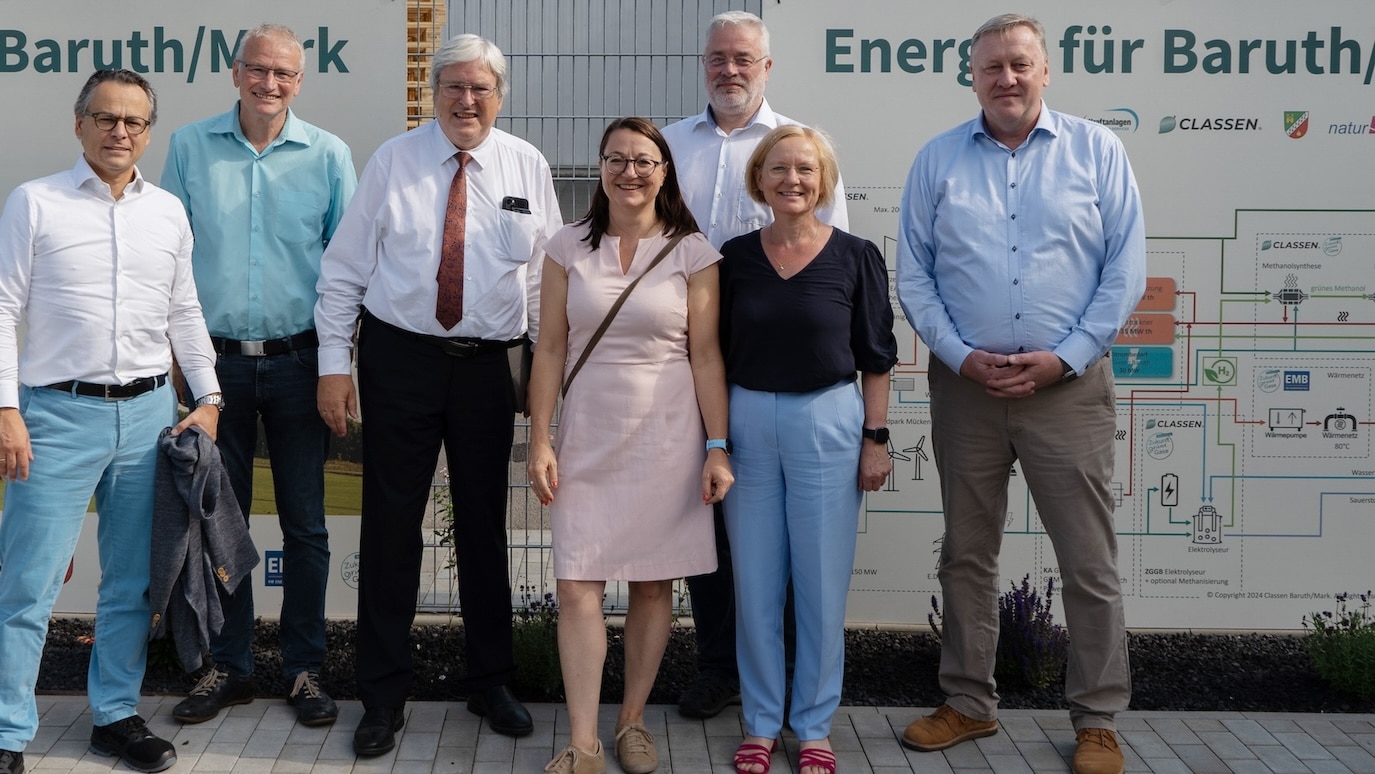
A group of seven people in front of an information board at CLASSEN in Baruth/Mark, photographed during an official visit – a symbol of exchange, cooperation, and sustainable energy projects
Photo: Group photo at the factory gate. Minister of Economic Affairs Jörg Steinbach (third from left) was welcomed at Classen by the project initiators: on the right, Fiberboard Managing Director André Hennig; second from left, naturwind Managing Director Bernd Jeske; and project manager Stephan Wiggeshoff (third from right). Also present were EMB Managing Director Leif Christian Cropp (left), Regional Councilor Ines Seiler, and Deputy District Administrator Dietlind Biesterfeld (second from right). Photo: Classen 
Wind power, heat, and hydrogen for Baruth: Prof. Jörg Steinbach, Ph.D., praises cross-sector energy plan 
During his visit to Baruth/Mark today, Brandenburg’s Minister of Economic Affairs, Prof. Dr.-Ing. Jörg Steinbach, toured the Classen’s laminate and fiberboard plant and learned about the planned measures to reduce CO2 emissions. The plant aims to meet its electricity needs from renewable sources in the future. To this end, Classen is planning to build a wind farm Classen with the naturwind group. Additionally, waste heat from production will be used to supply heat to the neighboring towns of Baruth/Mark and Mückendorf. There are also plans to produce hydrogen on-site to generate synthetic fuels or chemical feedstocks. Jörg Steinbach was impressed by the overall concept: “The wind power remains entirely within the region. This project demonstrates how the energy transition can work locally. It can contribute to a secure and affordable energy supply,” said Steinbach.

For the Classen, the success of this energy project is crucial to securing the approximately 1,000 local jobs. “We need the wind farm to ensure our energy supply. We provide the waste heat from our production free of charge to the regional heating network,” explained André Hennig, Managing Director of Fiberboard GmbH, a company within Classen. A heat pump will bring the waste heat up to the required temperature. The wind farm supplies the electricity for this. “This type of circular economy directly benefits local residents, secures jobs, and ensures an affordable heat supply. This is what a successful energy transition looks like—a model for Brandenburg and all of Germany,” says Ines Seiler, regional councilor for the Havelland-Fläming Planning Association from Baruth/Mark. The permitting process for the wind farm is set to begin later this year. Environmental studies, including the mapping of migratory and breeding birds, are nearing completion. The town of Baruth/Mark is developing a zoning plan. The goal is to begin construction of the wind farm in 2026.

The partner for the heat supply is EMB Energie Brandenburg GmbH. “We are now starting to plan the heating network,” says EMB project manager Tom Beier. In July, the project initiators received the grant notification for the heating network planning: approximately 630,000 euros from federal funding for efficient heating networks. The goal is to put the heating network into operation by the 2026/27 heating season. 

Brandenburg’s Minister of Economic Affairs, Jörg Steinbach, also welcomed the plans for hydrogen production in Baruth/Mark. The plan is to use hydrogen to produce methanol, which, as a precursor for glue production, will further advance the decarbonization of fiberboard manufacturing. “The collaboration with Classen a special local synergy effect here,” explained naturwind project manager Stephan Wiggeshoff.

About naturwind

Naturwind is an experienced renewable energy company dedicated to the development, planning, and operation of wind farms. Approximately 70 employees within the naturwind group also manage the integration of renewable electricity storage and its use in other energy sectors, such as for heat generation, as synthetic fuels, or as chemical feedstocks. With a strong focus on innovation, sustainability, and regional integration, naturwind is working to create a clean and reliable energy supply for the future. Projects in the state of Brandenburg are managed by naturwind Potsdam. 

About EMB

For over 30 years, EMB has served as a regional energy partner, supplying gas and green electricity to nearly 145,000 residential, commercial, and industrial customers in Brandenburg, as well as municipal utilities and regional providers. The company aims to drive the energy and heating transition in the state of Brandenburg. Whether gas, electricity, or energy solutions: the goal is for all EMB products and services to be climate-neutral by 2040. As a heating service provider for cities and municipalities, EMB also relies on local partnerships.

Circularity for a Better Future

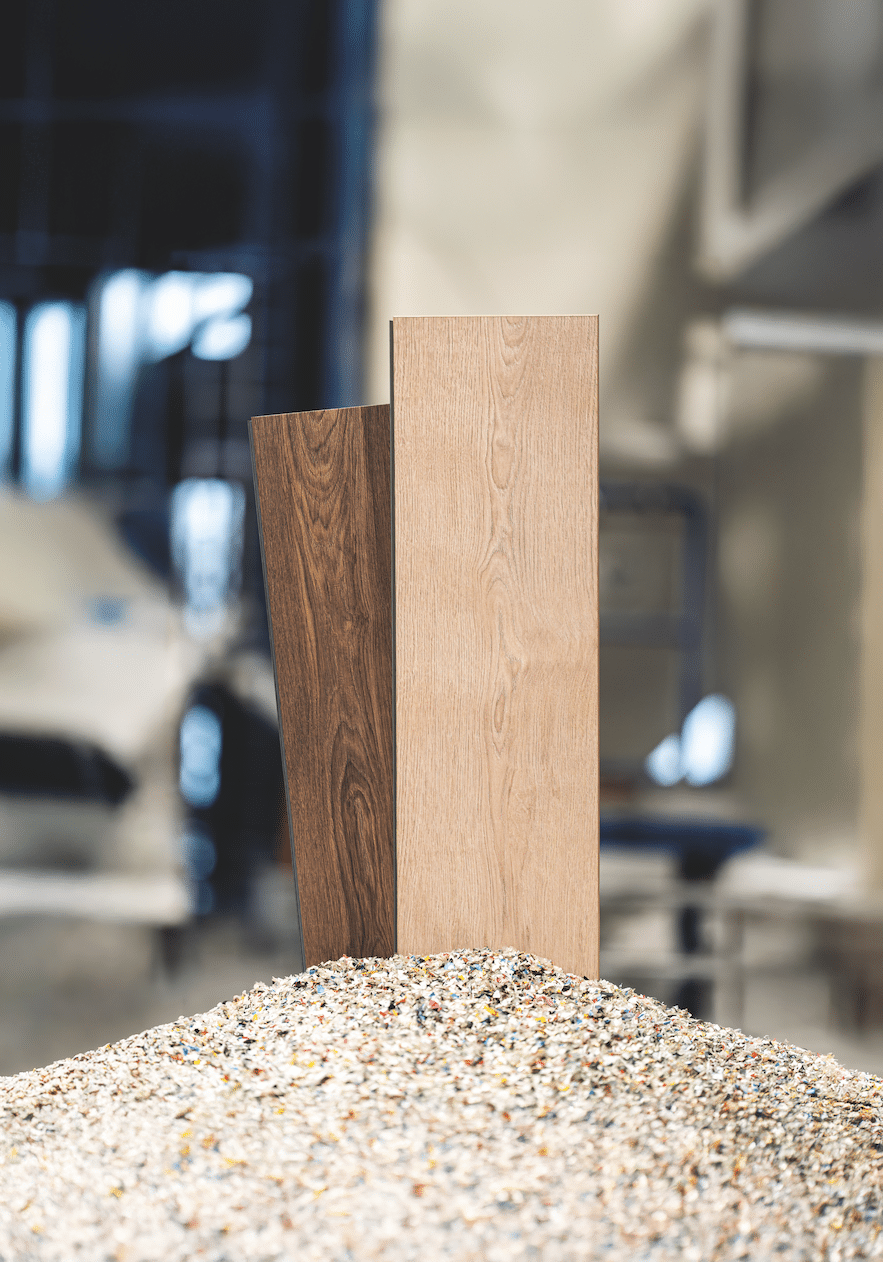
The Cradle to Cradle principle aims to design products so that they can be fully recycled without generating waste. CERAMIN from recycled and recyclable polypropylene (PP) and, at the end of its service life as a flooring material, can be reintroduced into the production cycle. Thanks to its material properties, it is suitable not only for reuse in new flooring but also for use in other products. This contributes to resource conservation and supports a sustainable circular economy.

A strong signal to the industry

With the Cradle to Cradle Material Health certification, the CLASSEN is sending a strong signal in support of sustainable innovation in the flooring industry. “This certification is another milestone for our company and demonstrates that sustainable business practices and high-quality product solutions can go hand in hand,” explains Sebastian Wendel, who is responsible for strategic business development at the CLASSEN.

You candownload images here.

Press Contact
classen

Wind power, heat, and hydrogen for Baruth: Prof. Jörg Steinbach, Ph.D., praises cross-sector energy plan 

During his visit to Baruth/Mark today, Brandenburg’s Minister of Economic Affairs, Prof. Dr.-Ing. Jörg Steinbach, toured the Classen’s laminate and fiberboard plant and learned about the planned measures to reduce CO2 emissions. The plant aims to meet its electricity needs from renewable sources in the future. To this end, Classen is planning to build a wind farm Classen with the naturwind group. Additionally, waste heat from production will be used to supply the neighboring towns of Baruth/Mark and Mückendorf with heat. There are also plans to produce hydrogen on-site to produce synthetic fuels or chemical feedstocks. Jörg Steinbach was impressed by the overall concept: “The wind power remains entirely within the region. This project demonstrates how the energy transition can work at the local level. It can contribute to a secure and affordable energy supply,” said Steinbach. 

For the Classen, the success of this energy project is crucial to securing the approximately 1,000 local jobs. “We need the wind farm to ensure our energy supply. We provide the waste heat from our production free of charge to the regional heating network,” explained André Hennig, Managing Director of Fiberboard GmbH, a company within Classen. A heat pump will bring the waste heat up to the required temperature. The wind farm supplies the electricity for this. “This type of circular economy directly benefits local residents, secures jobs, and ensures an affordable heat supply. This is what a successful energy transition looks like—a model for Brandenburg and all of Germany,” says Ines Seiler, regional councilor for the Havelland-Fläming Planning Association from Baruth/Mark. The permitting process for the wind farm is set to begin later this year. Environmental studies, including the mapping of migratory and breeding birds, are nearing completion. The town of Baruth/Mark is developing a zoning plan. The goal is to begin construction of the wind farm in 2026. 

EMB Energie Brandenburg GmbH is the partner for the heat supply. “We are now starting to plan the heating network,” says EMB project manager Tom Beier. In July, the project initiators received notification of funding for the heating network planning: approximately 630,000 euros from federal funding for efficient heating networks. The goal is to have the heating network operational by the 2026/27 heating season. 

Brandenburg’s Minister of Economic Affairs, Jörg Steinbach, also welcomed the plans for hydrogen production in Baruth/Mark. The plan is to use hydrogen to produce methanol, which, as an intermediate product for glue production, will further advance the decarbonization of fiberboard manufacturing. “The collaboration with Classen a unique local synergy effect here,” explained naturwind project manager Stephan Wiggeshoff. 

About naturwind: 

naturwind is an experienced renewable energy company dedicated to the development, planning, and operation of wind farms. Approximately 70 employees within the naturwind group also manage the integration of renewable electricity storage and its use in other energy sectors, such as for heat generation, as synthetic fuels, or as chemical feedstocks. With a strong focus on innovation, sustainability, and regionality, naturwind is working to create a clean and reliable energy supply for the future. Projects in the state of Brandenburg are managed by naturwind Potsdam. 

About EMB: 

For over 30 years, EMB has served as a regional energy partner, supplying gas and green electricity to nearly 145,000 residential, commercial, and industrial customers in Brandenburg, as well as municipal utilities and regional providers. The company aims to drive the energy and heating transition in the state of Brandenburg. Whether gas, electricity, or energy solutions: the goal is for all EMB products and services to be climate-neutral by 2040. As a heating service provider for cities and municipalities, EMB also relies on local partnerships. 


Photo: Group photo at the factory gate. Minister of Economic Affairs Jörg Steinbach (third from left) was welcomed at Classen by the project initiators: on the right, Fiberboard Managing Director André Hennig; second from left, naturwind Managing Director Bernd Jeske; and project manager Stephan Wiggeshoff (third from right). Also present were EMB Managing Director Leif Christian Cropp (left), Regional Councilor Ines Seiler, and Deputy District Administrator Dietlind Biesterfeld (second from right). Photo: Classen 


Share this post

Press Release


Press Release

Contact person

Contact
partner

Marketing Team
CLASSEN Group

Email
classen

About the CLASSEN Group

As a leading German manufacturer of wall and floor coverings, CLASSEN stands CLASSEN technological leadership and durable product solutions. Around 2,000 employees worldwide are committed to efficient processes, responsible use of materials, and continuous improvement throughout the entire value chain. With professional expertise and dedication, they promote resource-efficient processes, durable product concepts, and the return of suitable materials to the recycling loop. CLASSEN deliberately CLASSEN the use of chlorine, PVC, and plasticizers in its wall and floor coverings.


With numerous patents available to the entire industry, the company underscores not only its own independence but also its commitment to continuous innovation. With CERAMIN®, CLASSEN has developed CLASSEN material that consists largely of recycled plastic and is highly recyclable. In doing so, CLASSEN is making CLASSEN exemplary contribution to the circular economy. Founded in 1962 by Dr. Hans-Jürgen Hannig, the family-owned company is currently managed by three generations, including the founder himself, in its operational management.
magnifiercrossmenucheckmark-circle