




Flooring Over Underfloor Heating

Underfloor heating and new flooring—do they go together? In many cases, yes. However, not every type of flooring is automatically suitable for every heating system.
The soil structure, in particular, plays an important role. We'll explain what you should look for when making your selection and what common mistakes you can avoid.
1. Floor Heating and Floor Construction
Can any type of flooring be installed over underfloor heating?
No. Whether a floor is suitable depends on the specific product, the heating system, and the overall floor structure.
Therefore, when making a purchase, make sure to check whether the manufacturer explicitly approves the flooring for your existing floor heating system. Especially with electric floor heating systems, you should carefully review the manufacturer's specifications.
Are you still looking for the right flooring? Our product advisor will help you find flooring that meets your needs.
Why is thermal resistance important?
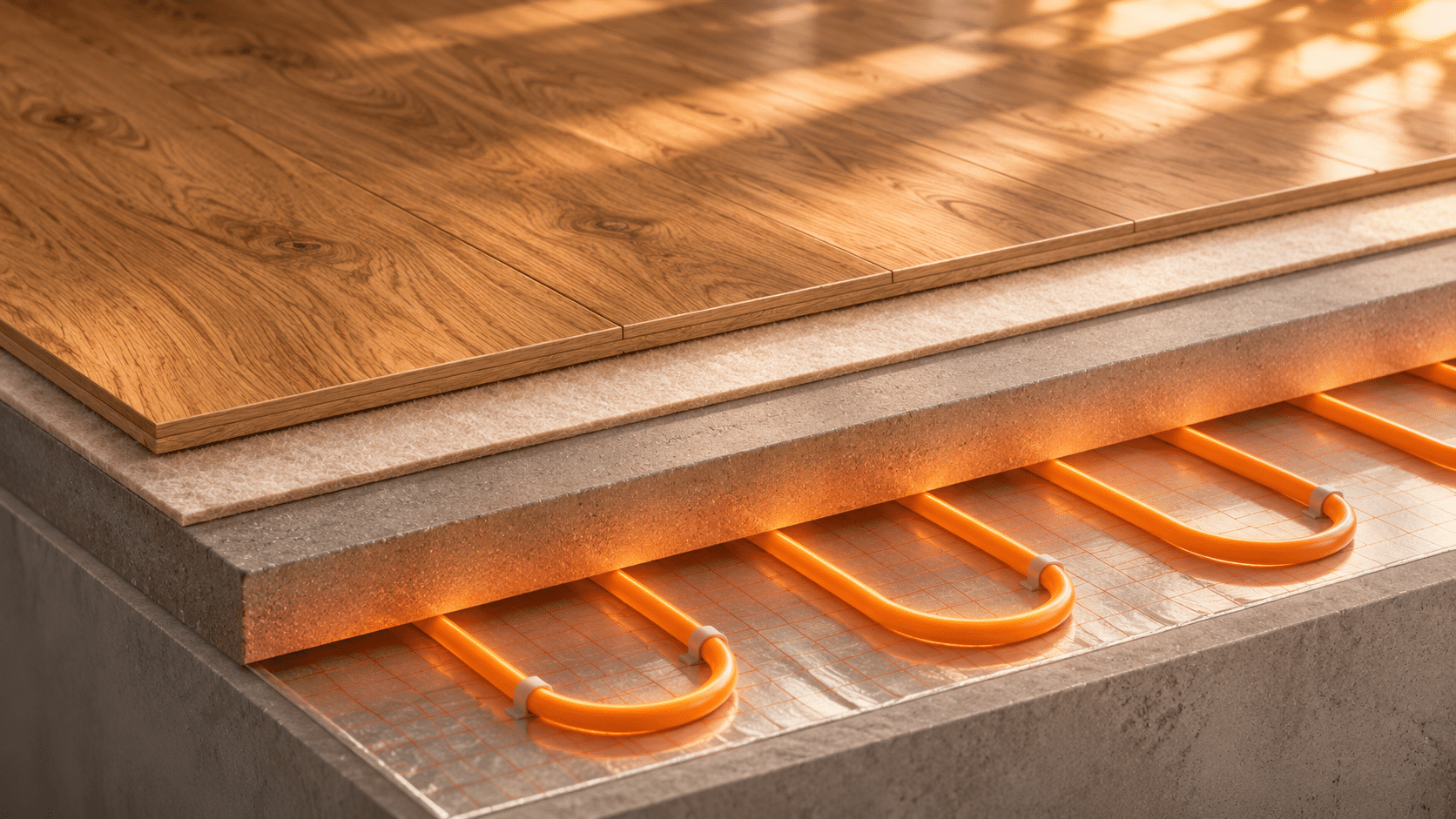
For the heat from the underfloor heating to reach the room, it must pass through several layers—such as the screed, the underlay, and the floor covering.
This is where the so-called thermal resistance comes into play. Simply put, it describes how much a material slows down the flow of heat.
It's not just the floor itself that matters: An additional underlayment also affects the overall floor structure.
Note: Don't just look at the flooring on its own; always consider the entire structure.
2. Laminate, Insulation, and CERAMIN
Laminate flooring on radiant floor heating—is that possible?
In general, laminate flooring can be installed over underfloor heating as long as the specific product is suitable for that purpose.
Choosing the right underlayment is particularly important. A highly insulating impact sound underlayment can impede heat transfer. Therefore, you should make sure that the flooring and underlayment are both designed for use with underfloor heating.
You should also follow the manufacturer's guidelines regarding permissible temperatures and installation.
On our laminate page, you can learn more about CLASSEN laminate and its various applications.
Do I need impact sound insulation?
That depends on the specific soil.
Some floors require a separate underlayment, while others already have a suitable underlayment built in. In such cases, adding additional insulation isn't necessarily advisable.
This is especially true for radiant floor heating: More insulation isn't necessarily better.
Before installation, check the flooring manufacturer's specifications and make sure you know which underlayment is intended for the specific product.
The installation system also plays a role in planning your new floor. Here's an overview of CLASSEN's installation systems for laminate flooring.
And what about CERAMIN?
Selected CERAMIN flooring products can also be installed over hot-water and electric floor heating systems.
Here, too, the specific product is key. The flooring, subfloor, installation method, and heating system must be compatible with one another.
Especially during a renovation, the installation height of the new floor can also play an important role.
For more information about CERAMIN flooring and its applications, visit our CERAMIN page.
3. Before You Buy
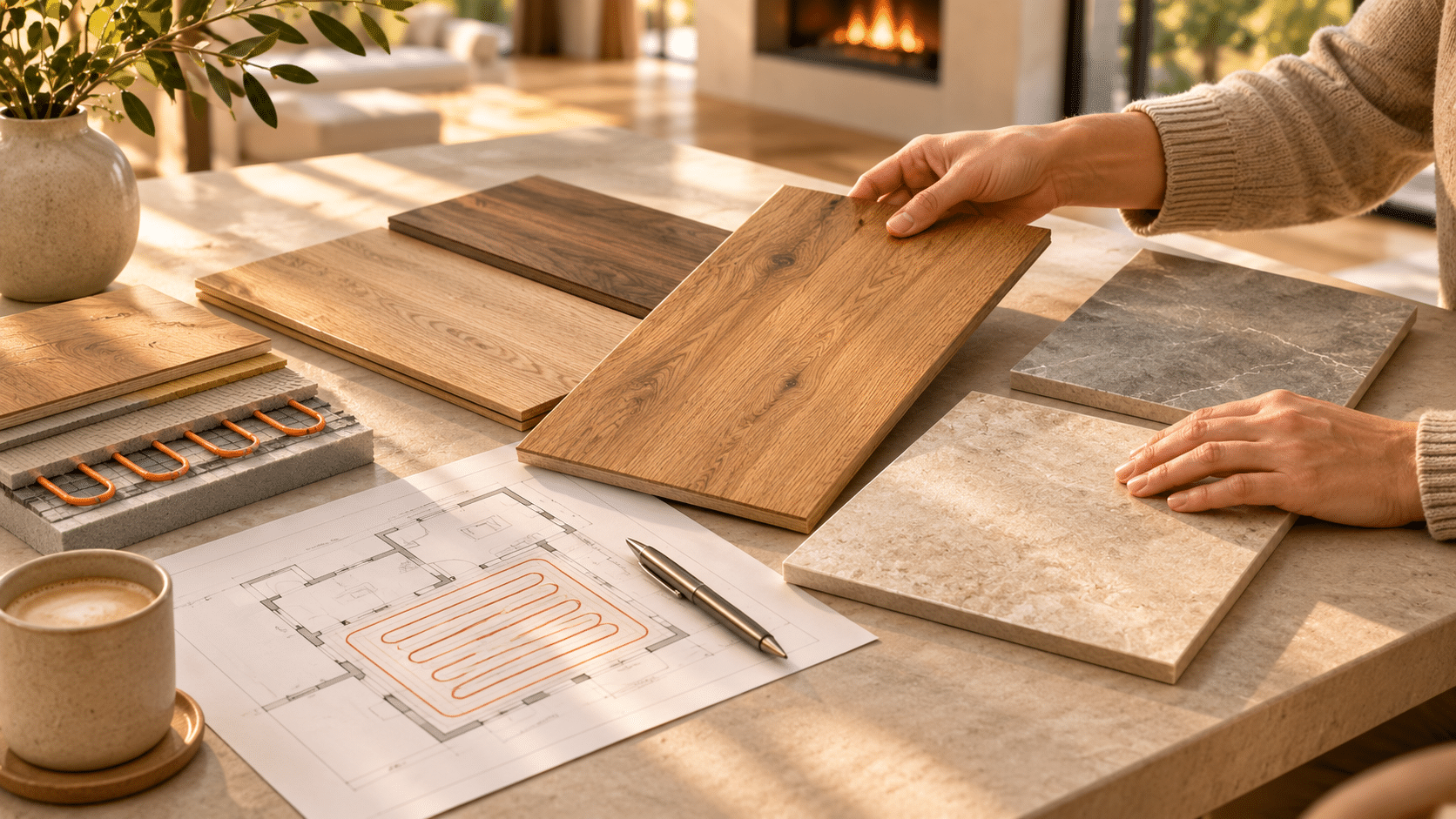
5 Things to Check Before You Buy
| Check | Why? |
|---|---|
| Approval for Floor Heating | Not every type of floor is suitable for every heating system. |
| Type of Floor Heating | Hot-water and electric floor heating systems may have different requirements. |
| Thermal resistance | The entire floor structure affects heat transfer. |
| Document | An unsuitable insulation underlayment can impair heat transfer . |
| Manufacturer's Specifications | Installation and temperature guidelines may vary depending on the product. |
Do you have any questions about choosing or installing flooring? In our FAQs, you'll find answers to common questions about flooring.
Common Mistakes with Floors and Underfloor Heating
Choose insulation that is as thick as possible
A thicker underlayment does not automatically mean greater comfort. With underfloor heating, a highly insulating layer can impair heat transfer.
Just pay attention to the flooring
The underlayment, subfloor, and heating system all work together. That is why it is important to always consider the entire system.
Do not check the product release
Even if a particular type of flooring can generally be combined with underfloor heating, that does not mean that every single product is suitable for it.
Conclusion: First check the soil structure, then choose the soil
Laminate, CERAMIN, and other flooring materials can be combined with underfloor heating—however, the specific product and the overall floor construction are always the deciding factors.
Therefore, check the manufacturer's specifications before purchasing and make sure that the flooring, underlayment, and heating system are compatible. This will help you avoid unpleasant surprises after installation.
Would you like to compare different types of flooring?
With a sample, you can take your time at home to look at the color, texture, and finish and see which floor works best for your room.
Discover Floor PatternsIf you've already found your favorite, you can use the CLASSEN Dealer Locator to find a dealer near you.