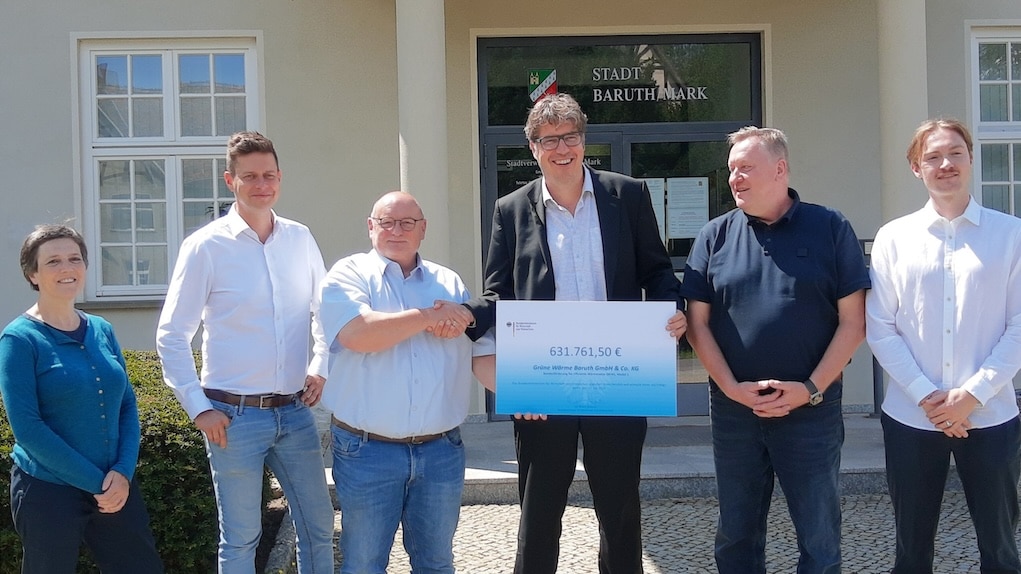
Caption: Michael Kellner (3rd from right) today presented the grant notification for the district heating network planning to Baruth’s mayor, Peter Ilk, in the presence of Fiberboard Managing Director André Hennig (2nd from right, Classen Group) and Fiberboard Project Manager Ronny Wendt (second from left), as well as Franz Oldopp (right) and Kaj Mertens-Stickel from Naturwind Potsdam.
Baruth/Mark, July 17, 2024 – Michael Kellner, Parliamentary State Secretary to the Federal Minister for Economic Affairs and Climate Protection, presented the grant notification today for the planning of the district heating network in Baruth and Mückendorf. The grant, totaling 631,761.50 euros from the Federal Funding Program for Efficient Heating Networks (BEW, Module 1), is specifically earmarked for the planning costs of the heating network in Baruth and Mückendorf. The grant marks an important milestone for the “Energy for Baruth” project.
When presenting the grant award notice, State Secretary Kellner emphasized the project’s importance for the region: “This project is an example of how regional cooperation and innovative solutions can advance the energy transition.” The district heating network is a key component of the planned energy project. In the future, industrial waste heat from the Classen plant will be used to heat the neighboring districts of Baruth and Mückendorf. A heat pump will bring the waste heat up to the required temperature. The electricity needed for this will be supplied by the Baruth-Mückendorf wind farm, which is also in the planning stages. The project arose from close collaboration between the wind farm developer naturwind Potsdam and the Classen Group in Baruth.
The planned district heating network could extend up to 34 kilometers. The goal is to achieve a high connection rate to ensure an economical heat supply that is attractive to residents.
Sustainability as a Guiding Principle
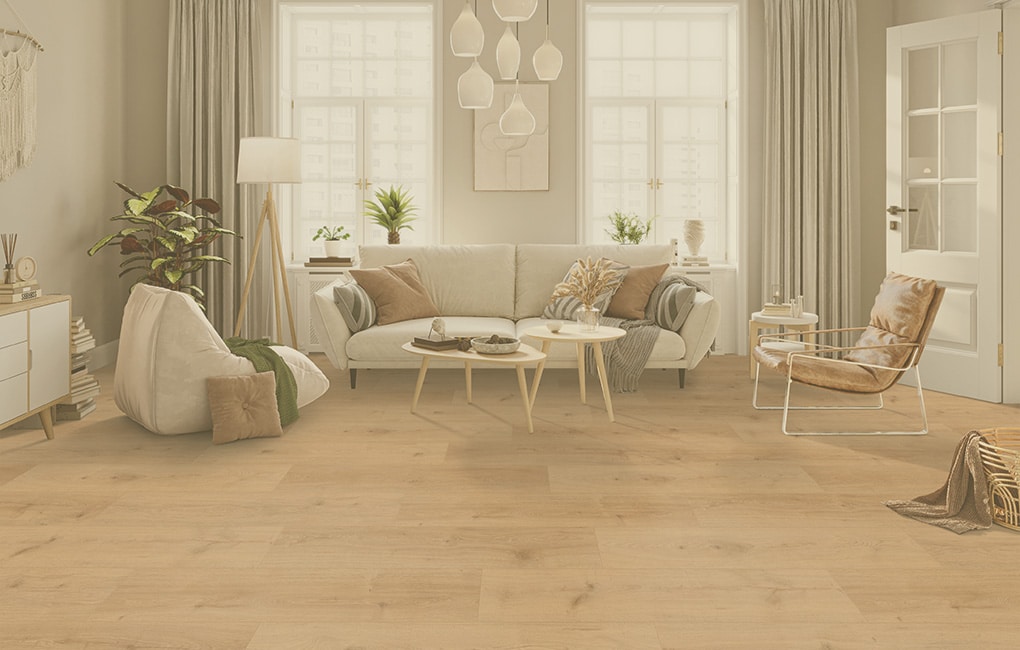
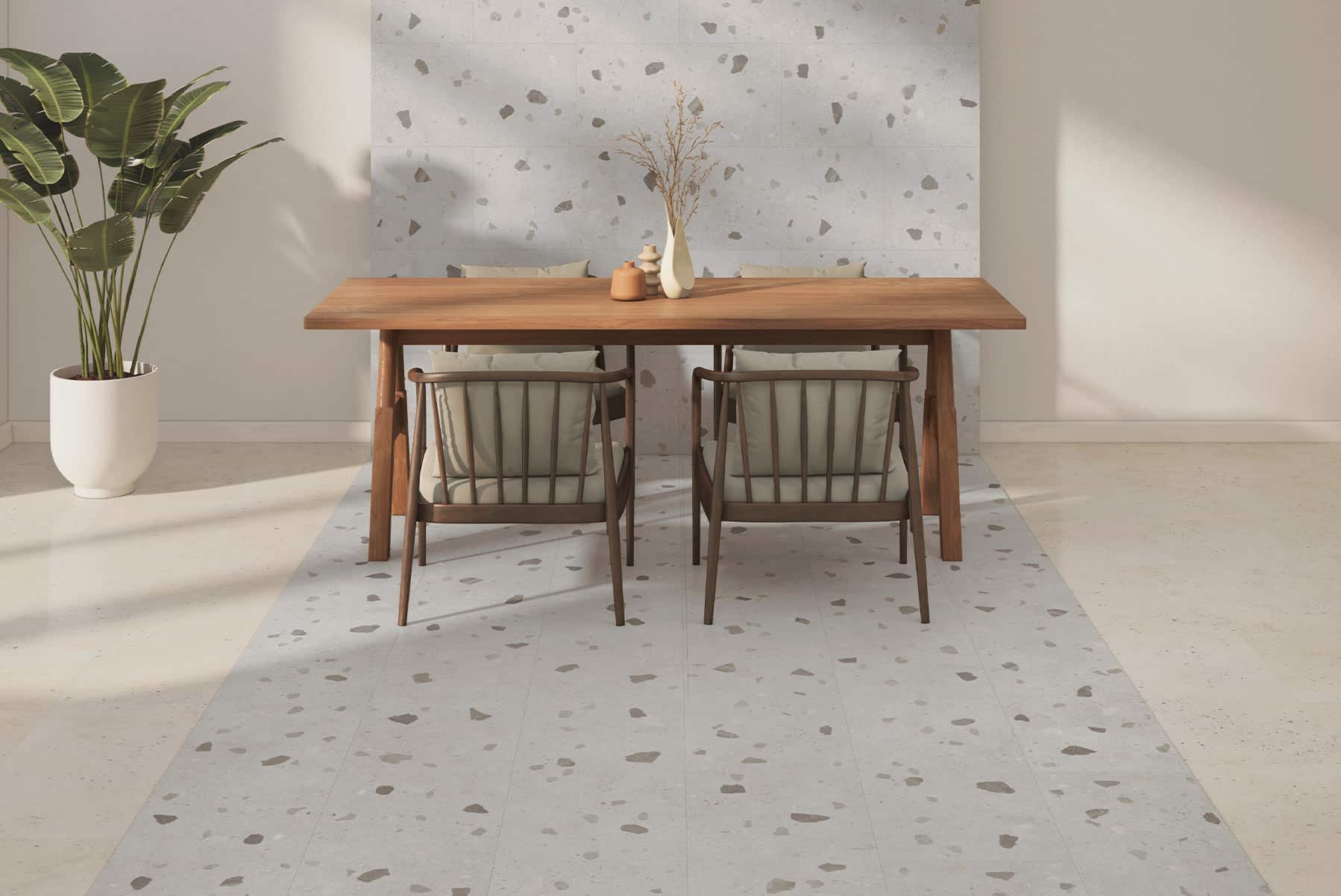
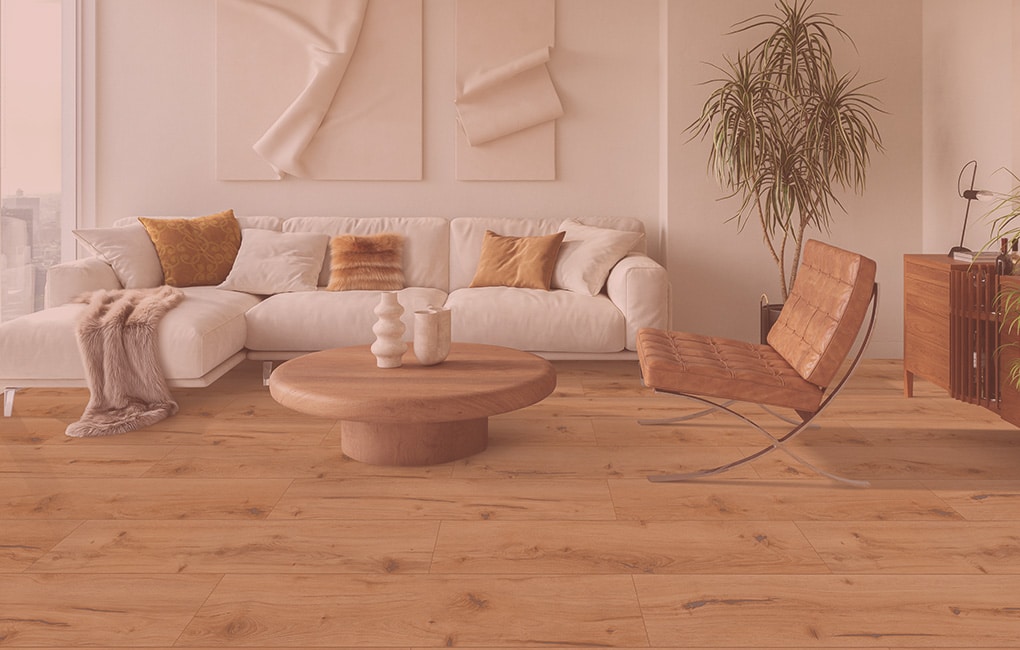
CERAMIN is a completely PVC-free flooring made from recycled and recyclable polypropylene (PP). The use of safe raw materials and energy-efficient production reduce its environmental footprint. The CLASSEN Group has been manufacturing CERAMIN in Germany for over ten years and has consistently championed environmentally friendly innovations in the flooring industry. In addition to Cradle to Cradle certification, CERAMIN holds other environmental and quality certifications, such as the “Blue Angel” eco-label.

Cradle to Cradle Material Health Certificate
The Cradle to Cradle Certified® Material Health certificate was issued for CERAMIN in February 2025. The certification bears the number 8902 and was conducted by EPEA GmbH—part of Drees & Sommer—as the leading assessment body. It is valid through February 27, 2028, and confirms compliance with the strict, globally recognized material health assessment method of the Cradle to Cradle Certified Product Standard at the Bronze level.
Circularity for a Better Future
The Cradle to Cradle principle aims to design products so that they can be fully recycled without generating waste. CERAMIN is made of recycled and recyclable polypropylene (PP) and, at the end of its useful life as flooring, can be reintroduced into the production cycle. Thanks to its material properties, it is suitable not only for reuse in new flooring but also for use in other products. This helps conserve resources and supports a sustainable circular economy.
A strong signal for the industry
With the Cradle to Cradle Material Health certification, the CLASSEN Group is sending a strong signal in support of sustainable innovation in the flooring industry. “This certification is another milestone for our company and demonstrates that sustainable business practices and high-quality product solutions can go hand in hand,” explains Sebastian Wendel, who is responsible for strategic business development at the CLASSEN Group.
You candownload images here.
Press Contact
presse@classen.com