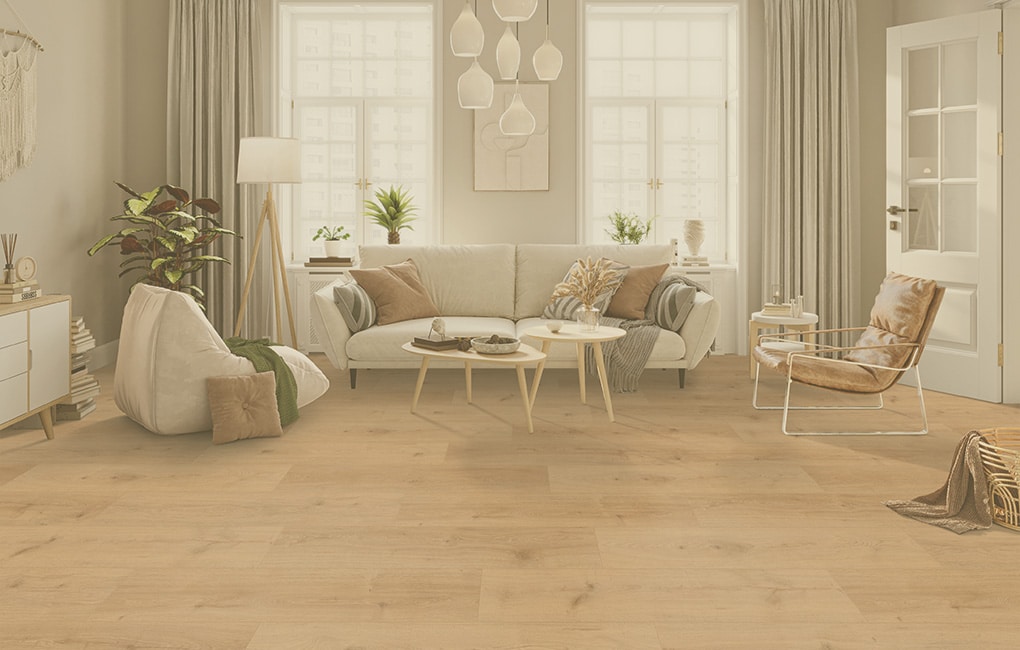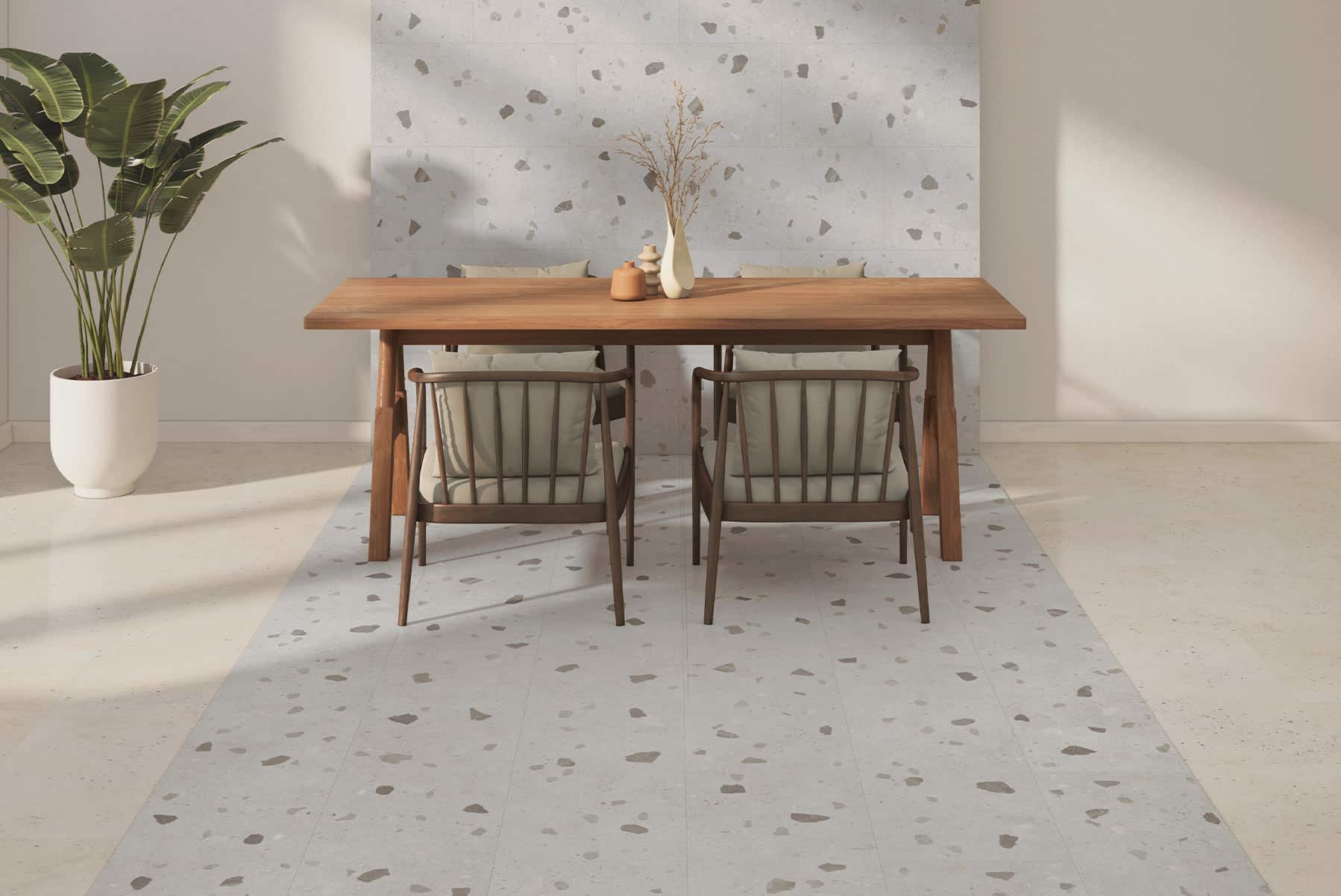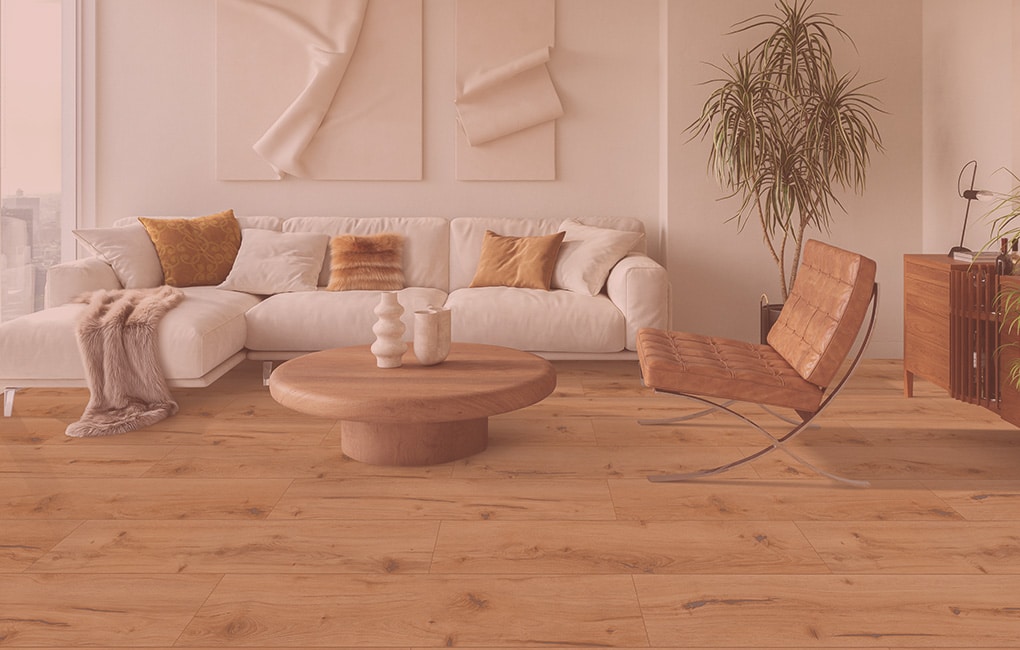
Kaisersesch, November 28, 2024 — The CLASSEN Group has received the coveted Solar Impulse Efficient Solution Label for CERAMIN®. This award recognizes CERAMIN as one of the most efficient and sustainable solutions for the construction and renovation industry.
CERAMIN is a completely PVC-free flooring made from recycled and recyclable polypropylene (PP). The use of safe raw materials and energy-efficient production reduce its environmental footprint. The CLASSEN Group has been manufacturing CERAMIN in Germany for over ten years and has consistently championed environmentally friendly innovations in the flooring industry. In addition to Cradle to Cradle certification, CERAMIN holds other environmental and quality certifications, such as the “Blue Angel” eco-label.
Sustainability as a Guiding Principle
CERAMIN is a completely PVC-free flooring made from recycled and recyclable polypropylene (PP). The use of safe raw materials and energy-efficient production reduce its environmental footprint. The CLASSEN Group has been manufacturing CERAMIN in Germany for over ten years and has consistently championed environmentally friendly innovations in the flooring industry. In addition to Cradle to Cradle certification, CERAMIN holds other environmental and quality certifications, such as the “Blue Angel” eco-label.

Cradle to Cradle Material Health Certificate
The Cradle to Cradle Certified® Material Health certificate was issued for CERAMIN in February 2025. The certification bears the number 8902 and was conducted by EPEA GmbH – Part of Drees & Sommer, a leading assessment body. It is valid through February 27, 2028, and confirms compliance with the strict, globally recognized material health assessment method of the Cradle to Cradle Certified Product Standard at the Bronze level.
Circularity for a Better Future
The Cradle to Cradle principle aims to design products so that they can be fully recycled without generating waste. CERAMIN is made of recycled and recyclable polypropylene (PP) and, at the end of its service life as flooring, can be reintroduced into the production cycle. Thanks to its material properties, it is suitable not only for reuse in new flooring but also for use in other products. This helps conserve resources and supports a sustainable circular economy.
A strong signal for the industry
With the Cradle to Cradle Material Health certification, the CLASSEN Group is sending a strong signal in support of sustainable innovation in the flooring industry. “This certification is another milestone for our company and demonstrates that sustainable business practices and high-quality product solutions can go hand in hand,” explains Sebastian Wendel, who is responsible for strategic business development at the CLASSEN Group.
You candownload images here.
Press Contact
presse@classen.com
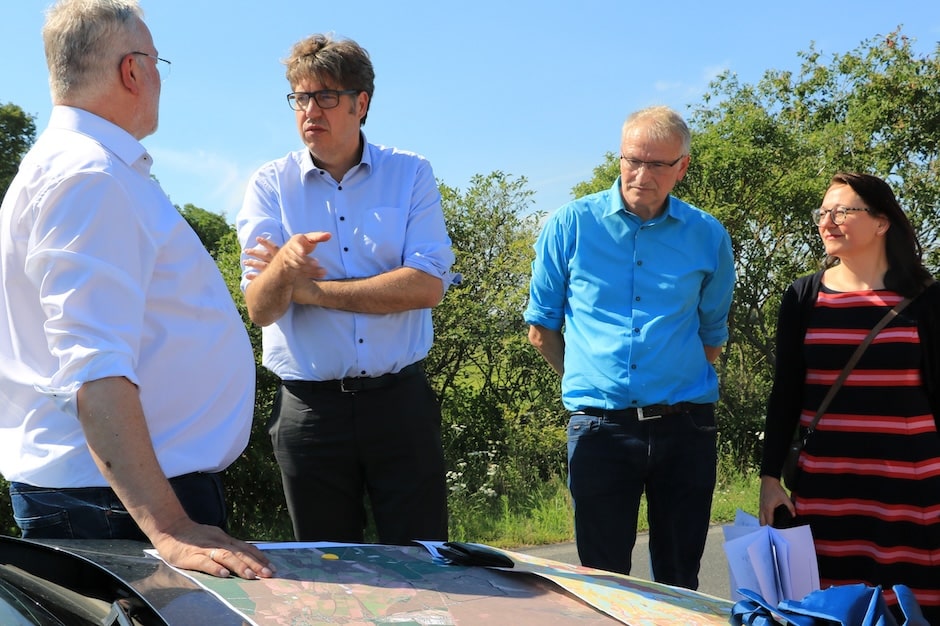
State Secretary Michael Kellner (second from left) listens as Naturwind Project Manager Stephan Wiggeshoff explains the plans for the Baruth-Mückendorf wind farm. On the right: Naturwind Managing Director Bernd Jeske and SPD District Council Member Ines Seiler. Photos: EMB
“Energy for Baruth”: Michael Kellner Praises Regional and Cross-Sector Energy Supply Plan
Michael Kellner, Parliamentary State Secretary at the Federal Ministry for Economic Affairs and Climate Action, visited Baruth/Mark yesterday to learn about the local energy supply plan for industry and residents of the Brandenburg municipality. The naturwind Group, together with the Classen Group and other partners, is planning to build a wind farm, a district heating network, and a hydrogen production facility. The “Energy for Baruth” project takes a decentralized and holistic approach. It aims to supply industry and residents in the region with electricity and heat. One hundred percent of the wind power generated remains in the region.
“This project stands out for its concept. The wind farm secures jobs at Classen and also helps supply heat to the town of Baruth. Concepts like this are crucial to the success of the energy transition,” says Michael Kellner. The Classen Group operates a laminate and fiberboard plant in Baruth. The plant’s electricity needs are to be met from renewable sources in the future. “The wind farm will not only supply clean electricity but also provide a solution for utilizing waste heat,” says André Hennig, managing director of Fiberboard GmbH, a company within the Classen Group. Waste heat from laminate and fiberboard production will be used to supply heat to the neighboring towns of Baruth and Mückendorf. Unavoidable industrial waste heat is considered equivalent to renewable energy. Residents will thus receive a green heating solution and meet the requirements of the Building Energy Act. “This project also stands out because it takes a cross-sectoral approach to municipal heat supply. A heat pump will raise the industrial waste heat to the required temperature level. This requires wind power,” explains Stephan Wiggeshoff, project manager for naturwind. When it comes to heat, EMB Energie Brandenburg GmbH complements the project initiators naturwind and Classen. “We’re glad that EMB is contributing its expertise as a regional heat supplier,” says Stephan Wiggeshoff. Planning for the heat network is set to begin shortly, as soon as funding is approved. The permitting process for the wind farm will also begin later this year. The city of Baruth supports the project and is currently developing a zoning plan for the Baruth-Mückendorf wind farm. Goal: Construction to begin in 2026.
Baruth’s energy concept goes even further: The plan is to produce hydrogen locally to obtain synthetic fuels or chemical feedstocks, such as green methanol for glue production at the laminate and fiberboard plant.
About Naturwind
Naturwind is an experienced company in the renewable energy sector dedicated to the development, planning, and operation of wind farms. Approximately 70 employees within the naturwind group of companies also manage the integration of renewable electricity storage and its use in other energy sectors, such as for heat generation, synthetic fuels, or chemical feedstocks. With a strong focus on innovation, sustainability, and regional involvement, naturwind is working to create a clean and reliable energy supply for the future. Projects in the state of Brandenburg are managed by naturwind Potsdam.
About EMB
For over 30 years, EMB has served as a regional energy partner, supplying gas and green electricity to nearly 145,000 residential, commercial, and industrial customers in Brandenburg, as well as municipal utilities and regional providers. The company aims to advance the energy and heating transition in the state of Brandenburg. Whether it’s gas, electricity, or energy solutions, the goal is for all of EMB’s products and services to be climate-neutral by 2040. As a heating service provider for cities and municipalities, EMB also relies on local partnerships to achieve this.
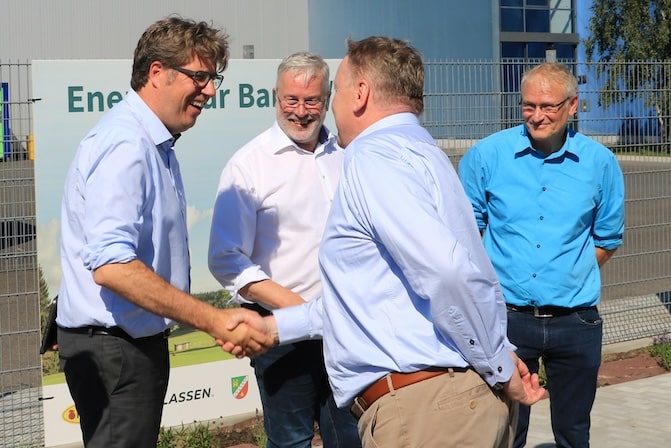
State Secretary Michael Kellner (left) is welcomed at the fiberboard plant by Fiberboard Managing Director André Hennig (second from right), along with Naturwind Managing Director Bernd Jeske (right) and Project Manager Stephan Wiggeshoff.